

Ice Art's Next Frontier
For centuries, ice sculpting has been a mesmerizing blend of physical endurance, artistic vision, and technical skill. The process is demanding – lugging heavy blocks of ice, battling the elements, and working against the clock as your medium slowly melts away. It’s a craft that demands years to master, often learned through apprenticeships and dedicated practice, and the results are often fleeting, beautiful works of art.
But what if you could learn and practice this art form from the comfort of your home, without the risk of frostbite or wasted ice? Virtual Reality (VR) is emerging as a surprising, and incredibly promising, new training ground for ice sculptors. It's still very early days, but the possibilities are genuinely exciting. We’re seeing the beginnings of a shift that could democratize access to this traditionally challenging art form.
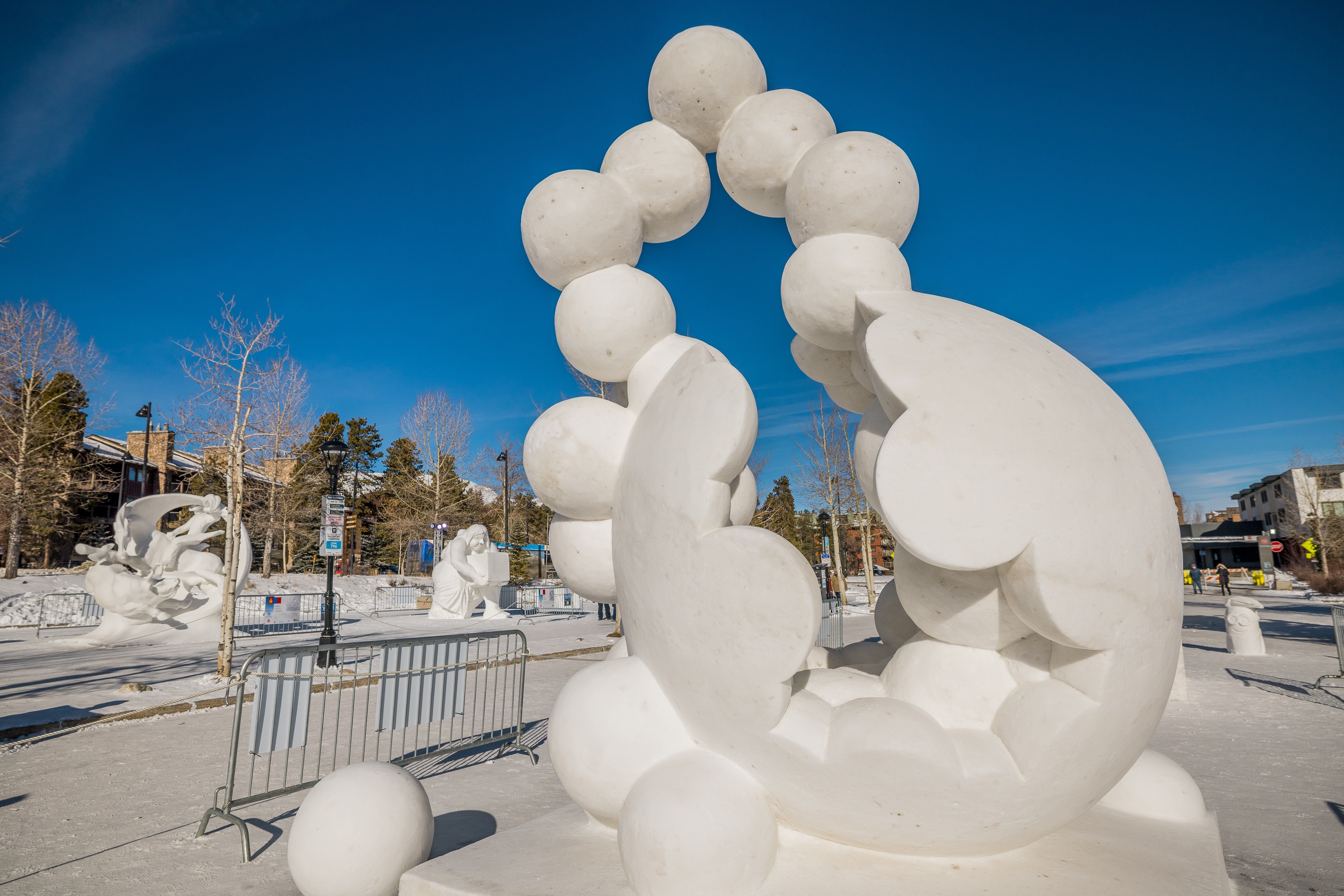
The artistry we aim to replicate digitally is on full display at events like the Harbor Point Ice Festival. Watching sculptors transform massive blocks of ice into intricate masterpieces is captivating, and VR training seeks to capture that same creative spark, offering a safe and accessible space to hone skills. The potential isn't just about replicating the look of ice sculpting; it's about capturing the feel of it, the strategic chipping away, the careful shaping, and the satisfaction of bringing a vision to life.
The Physics of Virtual Ice
Creating a convincing virtual ice sculpture isn't as simple as modeling a static shape. The core challenge lies in accurately simulating the physical properties of ice: its brittleness, its response to force, and its behavior as it melts or fractures. Developers need to account for stress points, the way ice cracks under pressure, and the subtle shifts in form as temperature changes.
This is a computationally intensive process. Realistic ice simulation requires complex algorithms and significant processing power. Unlike sculpting with clay where you can easily add material, removing material from virtual ice needs to convincingly mimic fracturing and chipping. Achieving this level of realism requires sophisticated physics engines and a deep understanding of material science.
Ultimately, the goal isn't necessarily to perfectly replicate the physics of ice – that may be beyond current capabilities – but to create a believable feeling of sculpting ice. It’s about making the digital material respond in a way that feels intuitive and satisfying to the user, even if it’s a slightly idealized representation of reality.
Tools of the Trade, Virtually Recreated
Traditional ice sculpting relies on a specific set of tools: chainsaws for rough shaping, chisels for detail work, grinders for smoothing surfaces, and various hand tools for refining the final form. VR sculpting aims to replicate these tools, but with the added benefits of a digital environment. Early VR sculpting programs often offered rudimentary shapes and basic manipulation tools.
However, things are evolving rapidly. We’re now seeing virtual tools that closely mimic their physical counterparts, allowing for precise control and intricate detailing. The advantage, of course, is the ability to "undo" mistakes, experiment without wasting material, and work in a safe, controlled environment. No more worrying about accidentally slicing off a finger with a chainsaw!
The potential for haptic feedback is also significant. Haptic suits and gloves can provide a sense of touch, allowing users to feel the resistance of the ice as they sculpt. While still an emerging technology and often expensive, haptic feedback adds a crucial layer of immersion and realism. The evolution of these virtual tools is ongoing, with developers constantly striving for greater precision, intuitiveness, and a more authentic sculpting experience.
Current VR Platforms & Software
Currently, there isn’t a single VR platform solely dedicated to ice sculpting training. However, several existing VR sculpting programs offer capabilities that can be adapted for this purpose. Programs like SculptVR and Tilt Brush, originally designed for digital clay sculpting, allow for detailed modeling and manipulation of virtual forms, and could serve as a starting point for ice art.
At Ice Impressions, we’re actively exploring the potential of VR to enhance our training programs and broaden access to this art form. We are evaluating the feasibility of developing custom VR modules that focus specifically on ice sculpting techniques, incorporating the unique challenges and aesthetics of the medium. This could involve creating virtual ice blocks with realistic fracturing properties and providing access to a suite of specialized tools.
The development of dedicated VR ice sculpting software is still in its infancy. There aren’t widely available, off-the-shelf solutions, meaning those interested in this field are currently relying on adapting existing tools or experimenting with game engines like Unity or Unreal Engine to create their own custom environments. The Harbor Point Ice Festival, while not directly involved in VR development, showcases the level of artistry that these tools aim to emulate.
- SculptVR: Versatile sculpting tool adaptable for ice-like forms.
- Tilt Brush: Offers artistic tools for creating detailed designs.
- Unity/Unreal Engine: Game engines allowing custom VR environment creation.
VR Software Comparison for Ice Sculpting Technique Replication (2026)
| Software | Ease of Use | Precision & Control | Material Simulation | Potential for Ice Sculpting |
|---|---|---|---|---|
| Tilt Brush | Very Accessible | Good for broad strokes, less detail | Limited physical properties | Low |
| Gravity Sketch | Moderate Learning Curve | Strong for precise curves and forms | Basic material appearance control | Medium |
| Medium by Adobe | Steeper Learning Curve | Excellent detail and sculpting fidelity | Offers layering and simulated density | High |
| Nomad Sculpt (VR) | Moderate | High precision, dynamic topology | Good for simulating soft materials | Medium-High |
| SculptrVR | Easy to learn | Reasonable precision, intuitive interface | Limited material options | Low-Medium |
| Blocks | Simple & Direct | Block-based building, less freeform | Minimal material properties | Low |
Qualitative comparison based on the article research brief. Confirm current product details in the official docs before making implementation choices.
Learning Curve: From Novice to Artist
One of the most exciting aspects of VR ice sculpting is its potential to lower the barrier to entry. Traditional ice sculpting requires significant physical strength and access to specialized equipment. VR, however, allows anyone with a VR headset to begin learning the fundamentals.
Skills from traditional sculpting – an understanding of form, composition, and negative space – certainly transfer to the virtual environment. However, new skills are also required. Navigating the VR interface, mastering the virtual tools, and developing an understanding of how digital ice behaves all take practice. It’s a different kind of muscle memory.
A potential training path might look like this: first, mastering basic shape creation and manipulation. Then, learning to use the virtual tools to create simple designs. Next, tackling more complex forms, focusing on detail work and texture. Finally, exploring advanced techniques like creating overhangs and delicate features. The key is iterative practice and learning from others.
- Step 1: Basic shape creation and manipulation.
- Step 2: Mastering virtual tools for simple designs.
- Step 3: Creating complex forms with detail work.
- Step 4: Exploring advanced techniques (overhangs, delicate features).
The Community & Competition Scene
As VR ice sculpting gains traction, a community is beginning to form around it. Online galleries and forums are emerging as spaces for artists to share their creations, receive feedback, and learn from one another. Facebook groups, like the Ice Impressions Custom Ice Sculptures page, are starting to showcase digital work alongside traditional sculptures.
YouTube is also becoming a hub for VR ice sculpting content. The Harbor Point Ice Festival video demonstrates the artistry that inspires these digital creations, while other channels are beginning to feature tutorials and showcases of VR sculpting techniques. This exchange of knowledge and inspiration is crucial for the growth of the community.
The potential for VR ice sculpting competitions is also intriguing. Imagine virtual festivals where artists from around the world can compete, judged on creativity, technical skill, and artistic merit. While still in its early stages, the prospect of a thriving VR ice sculpting competition scene is exciting and could further drive innovation and artistic expression.
2026: A Realistic Outlook
Looking ahead to 2026, I don’t expect to see fully photorealistic ice simulation in VR. Achieving that level of fidelity is still a significant technological hurdle. However, I anticipate substantial progress in several key areas. Software will become more sophisticated, offering more nuanced tools and more realistic physics simulations.
Haptic technology is also likely to become more affordable and accessible, allowing for a more immersive and tactile sculpting experience. We might see VR ice sculpting integrated into art school curricula, providing students with a safe and cost-effective way to learn the fundamentals of the craft. The tools will undoubtedly become more intuitive and user-friendly.
The biggest challenge will remain bridging the gap between the virtual and the physical. While VR can provide a fantastic training ground, it can’t fully replicate the unique challenges and rewards of working with real ice. However, I believe VR will become an increasingly valuable tool for ice sculptors, enabling them to refine their skills, explore new designs, and push the boundaries of this captivating art form. It’s not about replacing traditional sculpting, but about augmenting it.

No comments yet. Be the first to share your thoughts!