

The rise of structural ice art
The era of stacking simple ice blocks for weddings and festivals is ending. Event planners and venue owners now demand structural ice art that functions as permanent-grade architecture rather than temporary decor. This shift reflects a broader market movement toward high-stakes, durable event infrastructure where failure is not an option.
Modern structural ice art relies on advanced engineering principles. Sculptors use internal armatures, precise thermal zoning, and engineered ice blends to create pieces that withstand wind, humidity, and crowd interaction. These sculptures are no longer just visual centerpieces; they are load-bearing elements that must maintain integrity for hours or days under variable conditions.
For large-scale outdoor festivals, the margin for error has vanished. The cost of a failed installation—whether due to melting, cracking, or collapse—far exceeds the initial investment in high-quality materials and labor. This economic reality drives the adoption of professional-grade preservation techniques and structural reinforcement.
The visual impact of these complex forms is undeniable, but the underlying value lies in their reliability. As seen in recent industry showcases, the most successful installations combine artistic ambition with rigorous structural planning, ensuring the ice remains pristine from the first guest arrival to the final cleanup.
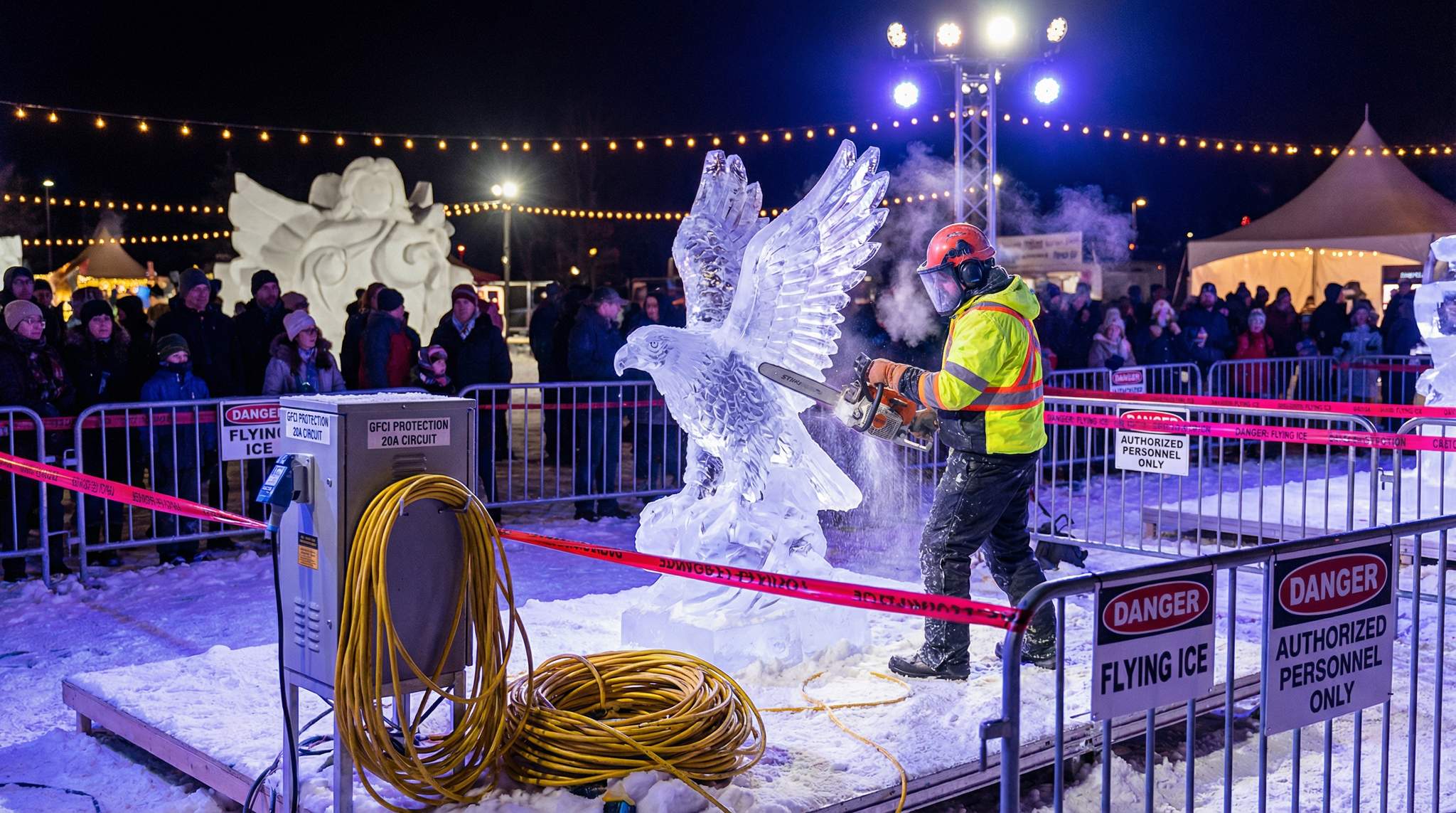
Engineering durability for outdoor festivals
Outdoor ice sculpture presents a distinct engineering challenge that differs sharply from indoor installations. The primary adversary is not just heat, but the combination of direct sunlight, wind, and temperature fluctuations that occur over the course of a single day. Without structural reinforcement, even a meticulously carved block can lose definition or collapse under its own weight within hours. Modern ice artisans treat these sculptures less like art pieces and more like temporary architectural structures, requiring a focus on load-bearing integrity and thermal management.
The foundation of any durable outdoor sculpture is its base and internal armoring. Sculptors often use a technique called "gluing" or "welding," where water is sprayed between two blocks of ice and allowed to freeze, creating a single, unified mass that is stronger than the individual blocks. This process eliminates weak joints that might fail under stress. Additionally, the base must be insulated. Placing the sculpture on a bed of straw, specialized foam, or a thick layer of sawdust prevents heat transfer from the ground, which is often significantly warmer than the air, especially during the day.
To combat melting, the surface of the ice is often treated with a thin layer of clear resin or a specialized ice-hardening solution. These coatings act as a barrier against evaporation and UV radiation, slowing the sublimation process that causes ice to shrink and lose its sharp edges. Some large-scale installations also incorporate internal cooling systems or use dry ice fog to create a microclimate around the sculpture, keeping the immediate temperature lower than the ambient air.
The visual impact of these engineering efforts is evident in the longevity of outdoor displays. While an indoor sculpture might last a few days, a well-engineered outdoor piece can withstand the elements for a full festival weekend, maintaining its clarity and structural integrity. This durability allows artists to create larger, more complex designs that would be impossible in a standard indoor setting.
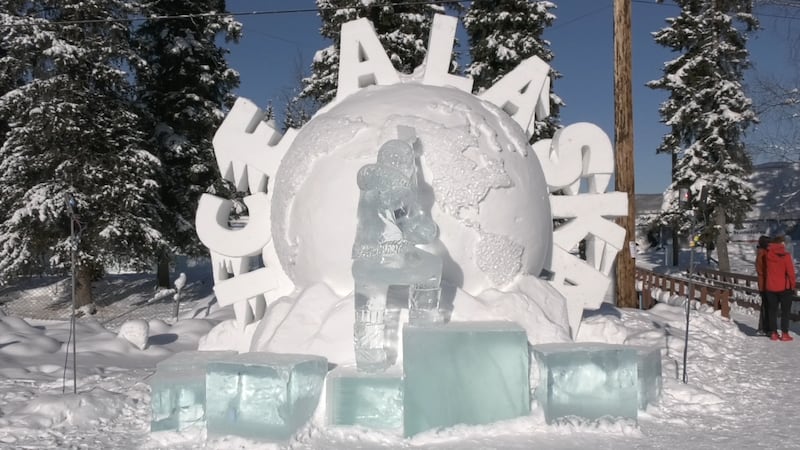
Wedding ice sculptures balance elegance with engineering
A wedding ice sculpture is not merely a decorative object; it is a structural challenge disguised as art. For couples planning a long reception, the aesthetic delicacy of a hand-carved swan or intricate monogram must be supported by rigorous engineering to ensure stability. The ice must withstand the weight of its own design, the ambient temperature shifts of a crowded venue, and the physical vibrations of guests moving around it.
Professional sculpters address these stability concerns through internal armatures and strategic base designs. Rather than relying on the ice to support itself entirely, artists often embed metal or wooden supports within the core of the sculpture. These hidden frameworks distribute weight evenly and prevent stress fractures that could lead to collapse during the event. This approach allows for larger, more ambitious designs without compromising safety.
The choice of ice also plays a critical role in longevity. Clear, bubble-free ice is denser and stronger than cloudy ice, making it less prone to cracking under pressure. Sculpters often use directional freezing techniques to align the ice crystals, resulting in a material that is both visually stunning and structurally resilient. This technical precision ensures that the centerpiece remains intact from the first toast to the final dance.
Managing temperature and structural integrity
The environment in which the sculpture resides is just as important as its construction. Even with robust internal supports, ice will succumb to heat. Venues must maintain a cool ambient temperature, typically below 40°F (4°C), to slow the melting process. Professional vendors often use dry ice beds or refrigerated plinths to provide additional cooling from the base up.
This balance between visual appeal and physical durability defines the modern wedding ice sculpture. It is a fusion of artistic tradition and practical engineering, ensuring that the centerpiece remains a focal point of elegance rather than a logistical hazard. By understanding these underlying requirements, couples can appreciate the complexity behind the seemingly simple beauty of ice art.
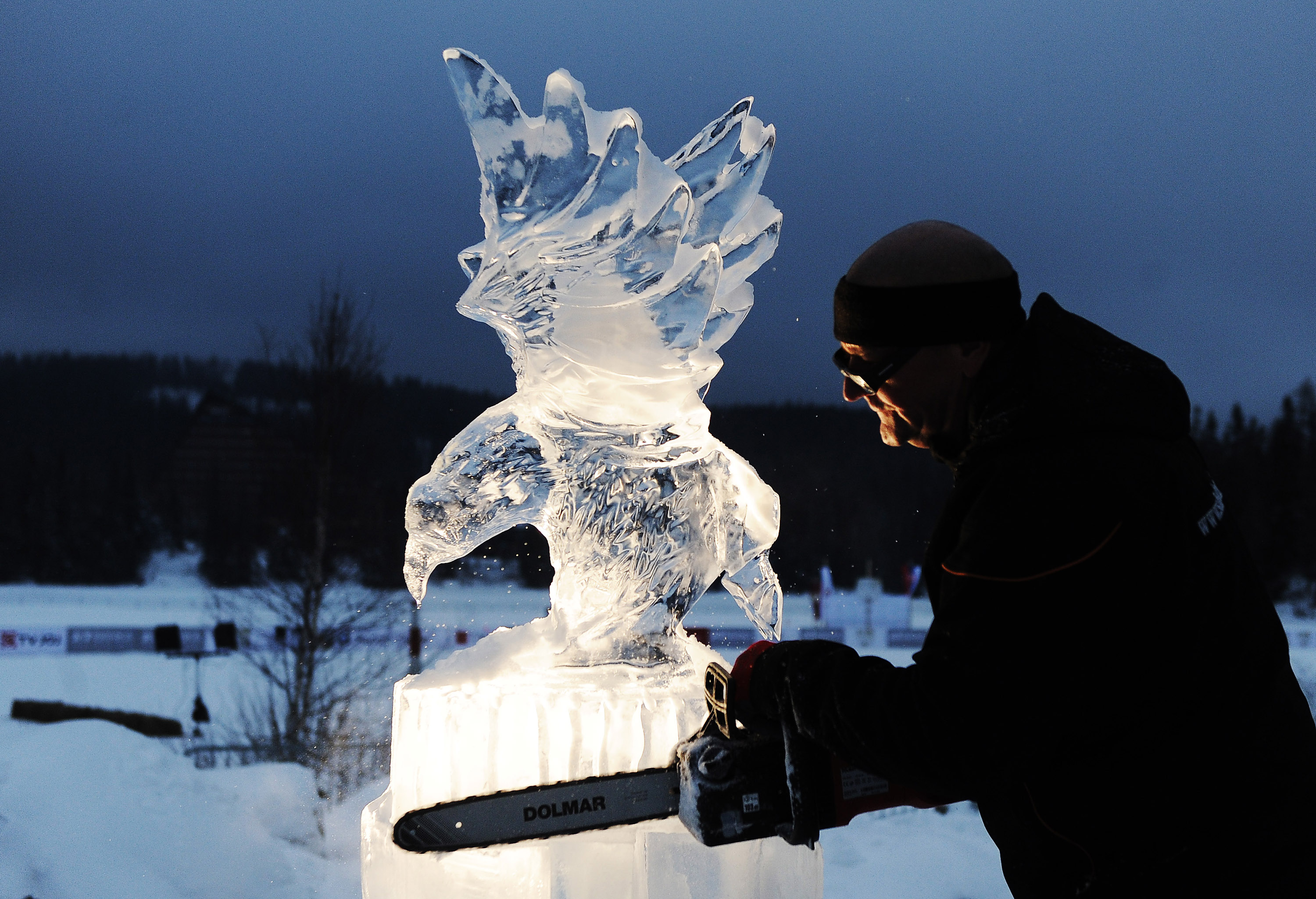
2026 Wedding & Festival Sculpture Trends
Ice sculpture design in 2026 is shifting away from purely decorative centerpieces toward integrated environmental elements. Couples and event planners are prioritizing thematic cohesion, where the ice piece acts as a functional anchor for the room’s aesthetic rather than a standalone object. This approach ensures that the sculpture complements the venue’s architecture, lighting, and overall narrative.
Integrated Lighting and Atmosphere
Static ice blocks are increasingly paired with dynamic lighting systems. LED uplighting and fiber optics are embedded directly into or positioned beneath sculptures to create depth and movement. This technique transforms a solid block of ice into a luminous focal point that adapts to the event’s timeline. As the evening progresses, color shifts can mirror the transition from cocktail hour to dinner, enhancing the guest experience without altering the physical structure.
The Rise of Clear Ice Blocks
Clarity remains the primary indicator of quality. The trend for 2026 heavily favors large, crystal-clear ice blocks that reveal intricate internal carvings. Unlike traditional cloudy ice, clear ice is denser and melts slower, allowing for more detailed work and longer display times. This preference is driven by a desire for a modern, minimalist look that photographs well and feels premium. The transparency allows light to pass through, making integrated lighting even more effective.
Thematic Cohesion and Customization
Designers are moving beyond generic shapes like swans or hearts. Custom sculptures now reflect specific themes, such as geometric patterns for modern weddings or organic forms for garden festivals. This customization extends to branding, with logos and monograms subtly integrated into the design. The goal is to create a piece that feels uniquely tied to the event’s identity, ensuring that the ice sculpture is not just seen but remembered as part of the story.
Planning your custom ice presentation
Working with a professional sculptor like Ice Impressions requires clear communication and realistic timelines. Custom ice sculptures are temporary art pieces that demand precise coordination between your vision and the sculptor’s technical constraints. Treat this process like a collaborative design project rather than a simple product order.
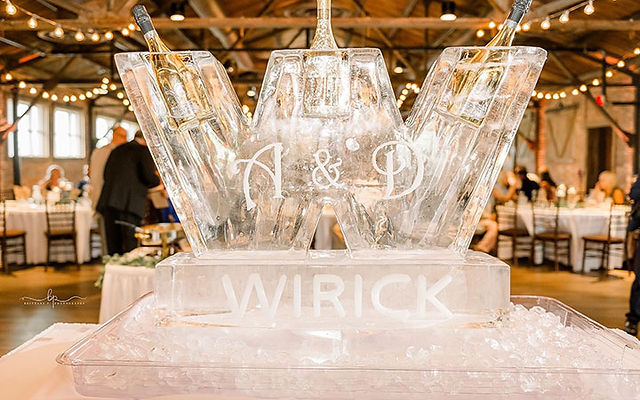
For personalized ice sculpture presentations, Weddings So Easy notes that professional teams work directly with event planners to create spectacular results. This collaboration ensures that the ice piece integrates seamlessly with your overall decor theme. By following these steps, you help guarantee that your custom ice presentation is both visually stunning and logistically smooth.
Common Questions About Ice Sculpture Durability
Ice sculptures are temporary works of art, but their lifespan depends heavily on environmental control and structural design. Understanding how temperature and humidity affect the ice helps planners set realistic expectations for their event.
How long does an ice sculpture last?
Under standard indoor conditions at 65°F (18°C), a typical ice sculpture remains intact for 8 to 12 hours. If the venue is kept cooler, between 50°F and 60°F (10°C to 15°C), the sculpture can last 18 to 24 hours or more. Extreme heat or direct sunlight will accelerate melting significantly, so climate control is the most critical factor in preservation.
Is ice sculpture water safe for guests?
The water from melting ice is generally safe for guests, but it is not recommended for drinking. Ice used in sculptures is made from purified water, and the melting process does not introduce harmful chemicals. However, the water may collect dust or debris from the air, and the sculpture itself might be handled by many people. For safety, it is best to treat the runoff as non-potable.
Can ice sculptures be used outdoors?
Outdoor ice sculptures are possible but require strict temperature management. They perform best when the ambient temperature stays below 50°F (10°C). In warmer conditions, the sculpture will melt quickly unless it is placed in a shaded, air-conditioned tent or near industrial fans. Direct sunlight and high humidity are the primary enemies of outdoor ice art.
No comments yet. Be the first to share your thoughts!