

AI and wedding ice
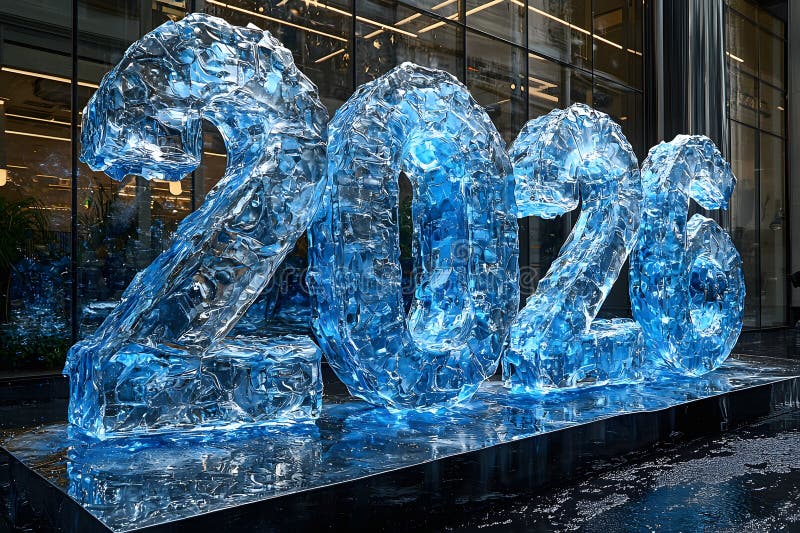
Wedding ice sculptures have always been a statement piece, a fleeting work of art adding a touch of magic to a special day. For years, designs have largely followed established patterns – swans, floral arrangements, perhaps a monogram. But things are shifting. We’re seeing a quiet revolution take hold, and by the 2026 wedding season, I anticipate AI-designed ice sculptures will be commonplace, particularly for spring ceremonies.
It’s not about robots wielding chisels, at least not yet. The current impact of artificial intelligence is in the design phase. Couples are increasingly requesting unique, personalized sculptures, and achieving that level of detail and complexity with traditional methods is incredibly time-consuming. AI offers a way to rapidly generate and refine concepts, pushing the boundaries of what’s possible.
Ice Impressions has been following this trend closely, observing a growing demand for originality. We’ve seen a move away from the predictable towards designs that truly reflect a couple’s personality. This is where AI excels; it can take abstract ideas – a shared love of astronomy, a favorite literary quote – and translate them into stunning visual representations in ice. The potential is enormous, and we’re excited to be at the forefront of this change.

Generative design in ice sculpting
At the heart of this transformation is generative design. Simply put, it’s a process where designers define a set of constraints and goals – the desired theme, the overall size, the level of detail – and then an AI algorithm generates multiple design options that meet those criteria. Think of it as a digital brainstorming partner, capable of exploring thousands of possibilities in a fraction of the time it would take a human.
The beauty of generative design isn’t just speed; it’s the ability to uncover unexpected solutions. AI can often propose forms and structures that a human designer might not have considered, leading to truly innovative and breathtaking results. It's important to understand that this isn’t about replacing artists. It's about giving them a powerful new tool to augment their creativity.
For ice sculpture, this translates to rapidly prototyping complex designs, identifying potential structural weaknesses, and optimizing the sculpture for both aesthetics and stability. Generative design allows sculptors to spend less time on initial modeling and more time on the intricate carving and finishing touches. It’s a collaborative process, with the artist guiding the AI and refining the results to achieve their vision.
The process isn’t fully automated. A skilled sculptor still needs to evaluate the AI-generated options, select the most promising designs, and then bring them to life with their own expertise. Consider it a partnership – the AI handles the initial exploration, and the artist provides the critical eye and the skilled hands.
#loftyevents #loftyeventsnj #eventrentalsnj #weddingdecorideas #njweddings
— loftyevents (@loftypr) March 20, 2026
Lofty events website | lofty events NJ | party rentals nj | nj party rental company | event planner nj | nj brides | 2026 brides | 2027 brides | 2027 wedding trends. 2026 wedding trends | 2027 brides |… pic.twitter.com/PDsj7kzdTB
Spring 2026 aesthetic trends
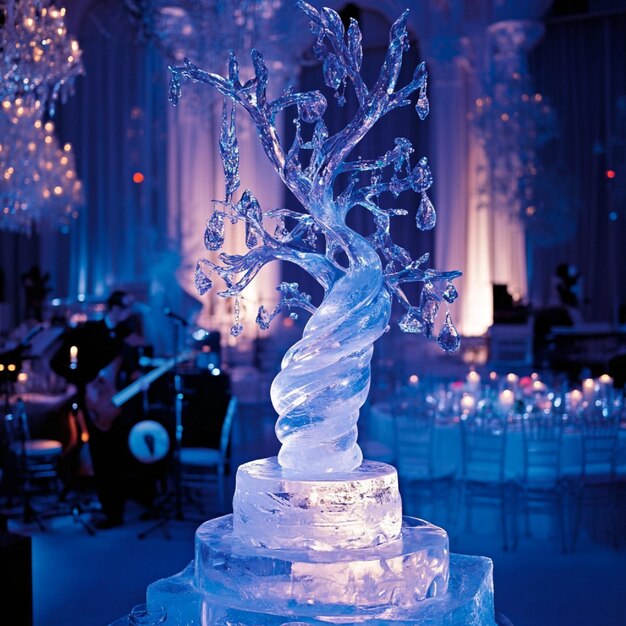
Based on current design trends and the early concepts we’re seeing generated by AI, I’m predicting a significant shift towards organic, flowing forms for spring 2026 weddings. Think vines cascading around a central structure, delicate floral patterns inspired by cherry blossoms, or wave-like curves evoking a sense of tranquility.
Alongside this natural aesthetic, we’re also seeing a resurgence of art deco-inspired geometric patterns. However, these aren’t the stark, rigid designs of the past. AI allows for a softer, more fluid execution, blending the sharp lines of art deco with the organic curves of nature – a kind of "biomorphic art deco’ as I"ve been calling it internally.
Expect to see a lot of interwoven elements, designs that seem to grow and evolve organically. AI is particularly good at creating these complex, interwoven patterns, suggesting designs that would be incredibly difficult to achieve manually. The color palettes will also lean towards softer tones – blush pinks, lavender, and icy blues – complementing the natural themes.

AI tools for sculptors
The tools ice sculptors are experimenting with aren’t necessarily what you’d expect. It’s not about AI-powered carving arms, but about software that bridges the gap between 2D concepts and 3D models suitable for carving. Programs like Autodesk Fusion 360, while not specifically designed for ice sculpture, are being adapted and integrated into the workflow.
A key element is the use of parametric modeling. This involves defining a design based on mathematical equations, allowing for precise control over every aspect of the sculpture. AI then helps optimize these parameters, ensuring the design is both aesthetically pleasing and structurally sound. It can quickly iterate through countless variations, identifying the optimal balance between form and function.
We’ve seen sculptors using AI-powered tools to generate complex undercuts and delicate features that would be incredibly challenging to carve by hand. These tools can also analyze a design and identify potential stress points, suggesting modifications to improve stability. It’s about minimizing waste and maximizing the sculpture’s lifespan.
The process often involves converting 2D sketches or photographs into 3D models using AI-powered image recognition software. This allows sculptors to quickly visualize their ideas in three dimensions and then refine them using parametric modeling techniques. It’s a surprisingly versatile combination of old and new technologies.
Currently, many sculptors are using a blend of software. Rhinoceros 3D is popular for its NURBS modeling capabilities, allowing for smooth curves which translate well to ice. Then, Grasshopper, a visual programming language integrated within Rhinoceros, allows for parametric control and AI-assisted optimization of designs. The learning curve is steep, but the results are worth it.
Structural challenges and AI solutions
Let’s be honest: ice is fragile. Creating large, complex ice sculptures presents significant engineering challenges. The weight of the ice, combined with its inherent brittleness, means that even a seemingly minor design flaw can lead to a catastrophic collapse. Traditional methods rely heavily on experience and intuition, but AI offers a more scientific approach.
AI can simulate stress points within a sculpture, identifying areas that are likely to fail under their own weight or external forces like wind. It can then suggest design modifications to improve stability – adding hidden supports, adjusting the thickness of different sections, or altering the overall shape. This predictive capability is invaluable.
One particularly exciting application is the optimization of internal structure. AI can design intricate internal supports – almost like a skeletal framework – that are hidden within the sculpture but provide crucial reinforcement. This allows for more ambitious and daring designs without compromising structural integrity. It’s like building an arch, but with far more complexity.
The software analyzes the design and calculates the distribution of stress, suggesting adjustments to ensure the sculpture can withstand the anticipated loads. It’s a level of precision that was simply not possible with traditional methods.
Color and texture in ice sculptures
The days of purely clear ice sculptures are fading. We're seeing a growing demand for colored ice, achieved using food-safe dyes, and textured surfaces that play with light and shadow. AI is proving to be a valuable tool in visualizing how different colors and textures will interact, helping designers create truly stunning effects.
AI can simulate how light will refract through colored ice, predicting the resulting patterns and hues. This allows for a more controlled and predictable outcome, ensuring the sculpture looks exactly as intended. It's particularly useful when combining multiple colors or creating gradients.
Another trend is embedding objects within the ice – flowers, LED lights, even small sculptures. AI can help plan the placement of these objects to maximize their visual impact, ensuring they’re perfectly positioned to catch the light or complement the overall design. The use of LED lighting is especially popular, creating a dramatic and ethereal glow.
Texturing the ice surface, creating patterns or rough edges, adds another layer of visual interest. AI can generate complex texture maps that can be used to guide the carving process, ensuring a consistent and aesthetically pleasing result.
The human touch in ice sculpting
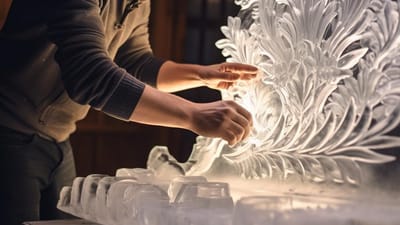
Despite the advancements in AI, the human touch remains absolutely essential. AI is a powerful tool, but it’s not a replacement for the skill, artistry, and experience of a trained ice sculptor. The precision of detail work, the ability to adapt to unforeseen challenges, and the sheer physical stamina required for carving all demand a human hand.
AI is freeing up sculptors to focus on the creative aspects of their work, rather than being bogged down in tedious modeling tasks. It allows them to explore more ambitious designs and push the boundaries of what’s possible. The collaboration between artist and machine is where the real magic happens.
Ultimately, ice sculpture is still an art form, and art requires passion, vision, and a deep understanding of the materials. AI can assist with the technical aspects, but it can’t replicate the human element. It’s a partnership that promises to deliver even more breathtaking and unforgettable ice sculptures in the years to come.

No comments yet. Be the first to share your thoughts!