

Ice art’s new dimension
Competitive ice sculpting has a surprisingly long history, evolving from simple block carving demonstrations to the elaborate, multi-block creations we see today. The World Ice Art Championships in Fairbanks, Alaska, for example, have been a cornerstone of the scene for decades, attracting artists from across the globe. These competitions historically focused on purely physical skill and artistry, judged on factors like technical execution, design, and overall impact.
The scene is changing as virtual reality moves into the carving pits. For the 2026 season, VR isn't replacing the chainsaw, but it is changing how artists map out their cuts before the first shard of ice hits the ground.
The 2026 circuit marks a break from tradition. Major events are adding VR-guided categories to bring in younger crowds and see how far they can push the medium. It changes the creative process from the first sketch to the final polish.
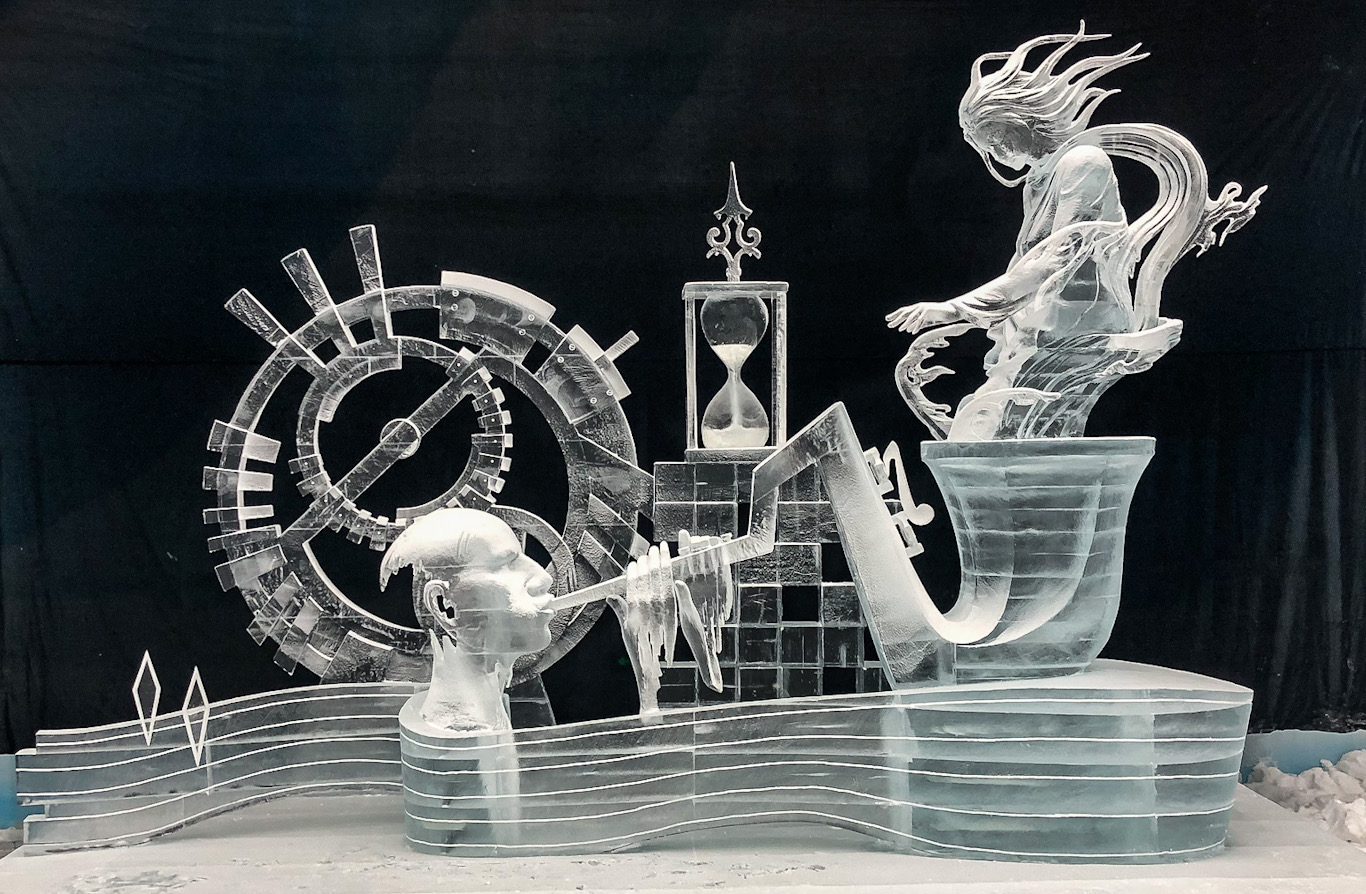
How VR sculpting actually works
The process of VR ice sculpting isn’t about magically creating ice with a wave of a hand. It’s a carefully calibrated system that blends the digital and physical worlds. Sculptors typically begin by designing their piece in a VR environment, using specialized software to create a detailed 3D model. This allows for complex designs and intricate details that might be difficult or impossible to achieve directly with traditional tools.
This is more than just a visual headset. Haptic gloves let sculptors feel the resistance of the ice. When you 'carve' in the digital space, the gloves push back, mimicking the vibration of a saw or the resistance of a chisel against a frozen block.
Tracking technology is also vital. The VR system precisely tracks the sculptor’s hand movements, translating them into actions within the virtual environment. This requires high-precision sensors and low-latency communication to ensure a seamless and responsive experience. The digital design then serves as a blueprint for the physical carving, with sculptors using traditional tools to bring their VR creation to life. It’s a hybrid approach, demanding a unique skillset.
Festivals leading the 2026 shift
Several festivals are already signaling their intention to incorporate VR-guided ice sculpting competitions in 2026. While specific event details are still emerging, early indications suggest a strong interest from organizers in Europe and North America. The Ice Alaska & World Ice Art Championships are actively exploring VR integration, with rules and guidelines being updated to accommodate the new technology.
Logistically, incorporating VR into outdoor festivals presents some significant hurdles. Power supply for the VR equipment is a primary concern, as is providing a stable and secure environment for the headsets and tracking systems. Weather protection is also critical; rain, snow, and extreme temperatures can all interfere with the technology. Dedicated, sheltered workspaces are becoming standard.
Beyond 2026, we can anticipate wider adoption as the technology becomes more affordable and reliable. Festivals known for innovation, like those in Quebec City and Harbin, China, are likely to be early adopters. The success of the initial VR competitions will undoubtedly influence other events to follow suit, potentially leading to a new standard in competitive ice sculpting.
Judging in a virtual world
Judging VR-guided ice sculptures is a complex undertaking. Traditional criteria – design complexity, technical skill, and artistic impression – remain important, but new considerations come into play. The skill demonstrated in the VR design phase is now a significant factor, alongside the execution of the physical carving. Judges are assessing not just what's been carved, but how it was conceived and planned.
Concerns about fairness and the potential for digital manipulation are legitimate. To address these, competitions are implementing strict guidelines regarding the use of design software and the documentation of the VR sculpting process. Some events are even requiring sculptors to record their VR sessions, providing a transparent record of their work. The 2025 WIAC Rules and Guidelines, for instance, are being adapted to include specifications for digital submissions and verification.
Interestingly, judges are increasingly using VR themselves to assess the sculptures. This allows them to view the piece from the sculptor’s original perspective, gaining a deeper understanding of the design intent and the challenges overcome. It’s a shift towards a more immersive and comprehensive judging process, reflecting the hybrid nature of the art form.
The growing software ecosystem
The VR hardware landscape is largely dominated by established players like Meta (Quest Pro) and HTC (Vive Pro). These headsets offer the necessary resolution, tracking accuracy, and processing power for detailed sculpting. However, the specific choice often comes down to personal preference and budget. We’re seeing sculptors gravitate towards headsets that offer comfortable extended wear, as competitions can be lengthy.
Software is getting more specific. Carvers are already using Blender and ZBrush to test whether a thin ice wing will collapse under its own weight before they ever touch a real block. It saves time and prevents expensive mid-competition collapses.
Haptic technology is also evolving rapidly. Companies are developing specialized gloves and tools that provide more realistic feedback, simulating the texture and resistance of ice. These advancements are crucial for bridging the gap between the virtual and physical worlds, allowing sculptors to truly "feel" their creations. While still relatively expensive, the cost of these tools is expected to decrease as the technology matures.
New skills for modern carvers
VR isn’t rendering traditional ice sculpting skills obsolete, but it’s certainly adding new layers of complexity. A strong foundation in traditional techniques – understanding ice properties, tool handling, and structural engineering – remains essential. The ability to translate a 3D virtual design into a physical form requires a deep understanding of these fundamentals.
However, new skills are becoming increasingly important. Digital design proficiency, VR navigation, and a grasp of haptic feedback systems are now vital for competitive sculptors. The learning curve can be steep, but many artists are finding that their existing artistic skills transfer well to the virtual environment. It's about augmenting existing abilities, not replacing them.
This shift in skillset is also potentially democratizing the art form. VR allows artists with physical limitations or limited access to tools to participate in competitions. It opens up the field to a wider range of creative voices and perspectives, fostering innovation and pushing the boundaries of ice sculpting.
What the audience sees
Festivals are actively working to enhance the spectator experience for VR-guided competitions. Simply watching someone wear a headset isn’t particularly engaging. The solution? Large screens displaying the virtual sculpting process in real-time, alongside the physical sculpture as it develops. This allows the audience to see how the piece is being created, not just the finished product.
Some festivals are even offering VR headsets to spectators, allowing them to "step into’ the sculptor"s perspective and experience the creation process firsthand. These immersive experiences are proving incredibly popular, drawing crowds and generating excitement. It's a new way to connect with the art form, fostering a deeper appreciation for the skill and creativity involved.
Live streaming and remote viewing are also gaining traction. This allows audiences from around the world to witness the competitions, expanding the reach of ice sculpting and fostering a global community of enthusiasts. It also opens up opportunities for interactive experiences, such as virtual Q&A sessions with the sculptors.
Content is being updated. Check back soon.

No comments yet. Be the first to share your thoughts!