

The demand for green ice
Events today are under increasing scrutiny for their environmental impact. From weddings to large festivals, there's a growing expectation that organizers will prioritize sustainability. This pressure extends to every aspect of event planning, and even traditionally "frivolous" elements like ice sculpting are now being re-evaluated.
Ice sculpting is a paradox. We use water—a resource becoming scarce in many regions—to create temporary art. At Ice Impressions, we are trying to figure out how to keep the art form alive without wasting resources.
New techniques are making sustainable sculpting possible. Instead of abandoning the craft, we are changing how we source ice and manage waste to keep it viable for events.
Sourcing ice responsibly
The first step towards sustainable ice sculpting is addressing where the ice actually comes from. Traditional ice production is incredibly energy-intensive. Freezing large blocks requires significant electricity, and then there's the energy used in transportation – often over considerable distances. This creates a substantial carbon footprint.
There are, however, alternatives. Harvesting ice from naturally frozen lakes is one option, but it’s complex. It requires permits, careful environmental impact assessments to ensure the lake’s ecosystem isn’t harmed, and, of course, a reliably cold climate. This isn't a viable solution everywhere.
Another promising avenue is utilizing ice created as a byproduct of other industrial processes. For example, many food processing plants and ammonia refrigeration systems generate ice as part of their cooling cycles. This "waste" ice can be repurposed for sculpting, reducing the need for dedicated ice production. Logistical challenges – ensuring purity and consistent block size – need to be addressed.
On-site ice production using renewable energy sources is perhaps the most sustainable long-term solution. A portable solar generator could power a small-scale ice maker, creating ice directly at the event location. While initial investment costs are higher, the reduced carbon footprint and independence from external suppliers can be significant.
Eco-friendly carving tools
Ice sculpting usually relies on gas chainsaws and grinders that are loud and energy-heavy. While the industry isn't changing overnight, more sculptors are looking for cleaner alternatives.
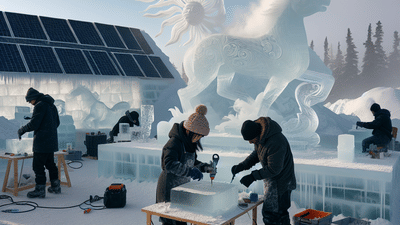
Electric tools offer a partial solution. Switching from gas-powered chainsaws to electric models drastically reduces emissions. These can be further powered by portable solar generators, creating a truly renewable carving setup. However, even electric tools consume energy, so efficiency is key.
Traditional hand tools are making a comeback. Sculptors can get sharp details using only chisels and picks. It takes more time and physical effort, but it uses zero electricity. We see more students asking for hand-tool training in our workshops.
Beyond the tools themselves, considering their lifespan and responsible disposal is crucial. Investing in high-quality tools that are built to last minimizes the need for frequent replacements. When tools do reach the end of their life, prioritizing recycling or responsible disposal is essential.
- Electric tools reduce site emissions compared to gas-powered saws.
- Hand tools eliminate energy consumption entirely but require more labor.
- High-quality steel tools last for decades, reducing the waste from cheap, disposable equipment.
Cutting waste through design
A significant portion of ice sculpting waste comes from chipping, breakage, and inefficient design. The artistry of sustainable ice sculpting isn’t just about the final product, it’s about the process and minimizing what’s left over. Thoughtful design is paramount.
Simpler designs, utilizing more of the original block, are inherently more sustainable. Intricate, highly detailed sculptures often require removing large amounts of ice to achieve the desired effect. Incorporating negative space – the ice around the design – can reduce overall waste.
The skill of the sculptor plays a major role. As demonstrated in the Architectural Digest video, a master carver can remove ice with precision and control, minimizing chipping and breakage. Adapting those techniques to prioritize waste reduction is a key focus.
3D modeling and CNC routing could potentially play a role in pre-planning, allowing sculptors to visualize the design and optimize the carving path to reduce waste. However, the energy consumption of CNC machines needs to be carefully considered. It's a trade-off.
Capturing and reusing water
Traditionally, the meltwater from ice sculptures is simply drained away. This represents a lost opportunity. Capturing and reusing this water is a logical step towards sustainability, but it presents logistical challenges.
The meltwater can potentially be used for irrigation, cleaning, or other non-potable purposes. However, regulations surrounding the reuse of meltwater vary depending on location. Event planners need to ensure they comply with all applicable local laws.
Implementing a water capture system requires planning. This might involve strategically placing collection basins or connecting drainage points to a temporary storage tank. The size of the system will depend on the scale of the sculpture and the duration of the event.
Refreezing the meltwater is technically possible, but it’s energy-intensive and often negates the environmental benefits. It’s generally more sustainable to find alternative uses for the water rather than attempting to recreate the ice.
Natural additives and colorants
Many ice sculptures incorporate color to enhance their visual impact. Traditional dyes, however, can be harmful to the environment. Finding sustainable alternatives is an ongoing challenge.
Natural food colorings work, though the palette is small. Beet juice makes red, spinach makes green, and turmeric makes yellow. These colors are usually softer than synthetic dyes.
Research is underway to develop biodegradable pigments specifically for use in ice sculpting. Algae-based colorants show promise, but they are still in the early stages of development. The availability and cost of these materials are currently significant barriers.
Accepting a more limited color palette is a trade-off for sustainability. Focusing on the natural beauty of the ice itself, combined with strategic lighting, can create stunning effects without relying on artificial colors.
Transport and display
The environmental impact of an ice sculpture extends beyond its creation. Transporting the sculpture to the event location and keeping it cold during display contribute significantly to its carbon footprint.
Prioritizing local ice sourcing is crucial. The shorter the distance the ice needs to travel, the lower the emissions. Working with regional ice suppliers reduces reliance on long-haul transportation.
Energy-efficient refrigeration options are essential. Insulated containers can help maintain the sculpture’s temperature for extended periods, reducing the need for constant cooling. Solar-powered cooling systems offer a renewable alternative to traditional generators.
Display lighting should also be considered. Opting for LEDs instead of incandescent bulbs significantly reduces energy consumption. Using timers and motion sensors can further minimize energy waste.
Real-world examples
Several events are already demonstrating a commitment to sustainable ice sculpting practices. The Winter Light Festival in Rotterdam, for example, has implemented a water capture and reuse system to minimize waste. They collect the meltwater and use it to irrigate the surrounding park.
At Ice Impressions, we recently partnered with a local winery for a wedding event. We sourced ice from a nearby food processing plant and utilized hand tools for the carving process, significantly reducing the event’s carbon footprint. The client was thrilled with the results and the alignment with their own sustainability values.
The Ice Magic Festival in Yellowknife, Canada, prioritizes working with local artists and sourcing ice from nearby lakes (with appropriate permits and environmental assessments). They also emphasize minimizing waste through careful design and carving techniques.
These projects show that green sculpting works in practice. It requires more planning, but it keeps ice art relevant as event standards change.
No comments yet. Be the first to share your thoughts!