

Frozen Futures: AI and Wedding Ice
Something remarkable is happening in the world of luxury weddings: AI is becoming a sculptor. We’re seeing a significant increase in demand for custom ice sculptures, and increasingly, couples are turning to artificial intelligence to help realize their visions. It’s not about replacing the artistry of a skilled sculptor, but augmenting it, allowing for designs previously considered too complex or simply unimaginable.
This shift isn’t accidental. Recent advancements in AI, particularly in generative design, have made it possible to quickly create and iterate on complex 3D models. Simultaneously, couples are seeking more personalized and memorable experiences, pushing the boundaries of traditional wedding décor. The 'wow' factor is paramount, and a uniquely designed ice sculpture, born from the collaboration between human creativity and artificial intelligence, certainly delivers.
High-end wedding design in 2026 is less about grand displays of wealth and more about curated experiences that reflect the couple’s individual story. Ice sculptures, once largely relegated to elegant but somewhat predictable swan motifs, are now being positioned as focal points—interactive art installations that capture a feeling, a memory, or a shared passion. They’re moving beyond decoration and becoming integral to the narrative of the event.

Generative Design: The New Sculptor
The process begins not with a chisel, but with a prompt. Couples work with designers who utilize AI tools to translate their ideas into visual concepts. They might input a theme—a shared love of travel, a favorite literary quote, or the architectural style of their first date—along with desired color palettes for internal lighting and overall aesthetic preferences. The AI then generates multiple design options, offering a range of interpretations.
Much of this is powered by generative adversarial networks (GANs) and diffusion models. While the technical details can be complex, the core concept is relatively straightforward: the AI learns from a vast dataset of existing designs and then uses that knowledge to create new, original pieces. It’s a process of constant refinement, where the AI generates an image, then a 'discriminator' evaluates its realism and quality, and the AI adjusts its approach accordingly.
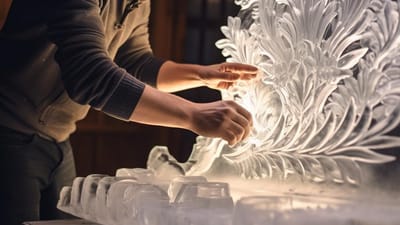
However, it’s important to emphasize that AI doesn’t operate in a vacuum. The role of the human ice sculptor remains essential. These AI-generated designs are often initial concepts, requiring the sculptor's expertise to assess structural feasibility, refine intricate details, and translate the digital model into a physical reality. The sculptor’s eye is critical for ensuring the sculpture is not only beautiful but also stable and safe.
Companies like Ice Impressions are already experimenting with these tools, allowing clients to visualize their ideas in stunning detail before a single block of ice is touched. The initial design phase, which once took days of sketching and modeling, can now be completed in a matter of hours, freeing up the sculptor to focus on the artistry of the carving process.
Popular Motifs: What Couples Are Requesting
The days of the ubiquitous swan are numbered. While classic designs still have their place, we’re seeing a dramatic shift towards personalized and symbolic motifs for 2026 weddings. Couples want sculptures that tell their story, that represent their unique connection. This is where AI truly shines, enabling the creation of designs far beyond the capabilities of traditional methods.
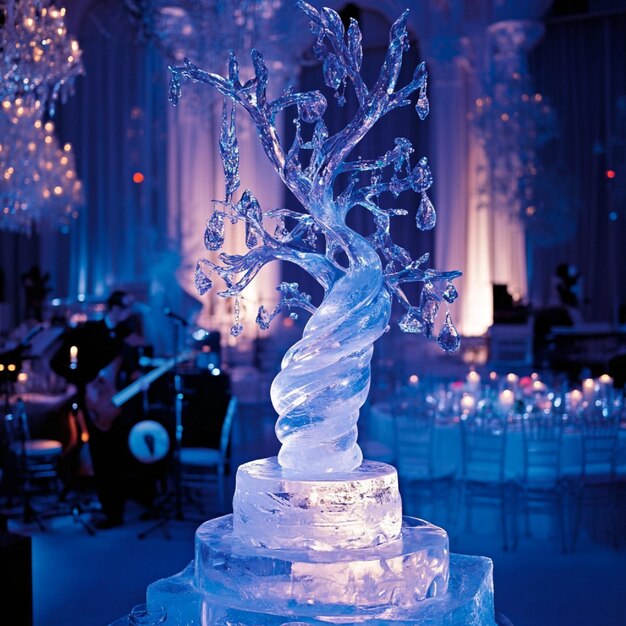
Abstract representations of the couple’s love story are particularly popular. These aren’t literal depictions, but rather artistic interpretations of their journey together—intertwined shapes symbolizing their union, flowing lines representing their shared experiences. Recreations of significant locations, such as the place they first met or a beloved vacation spot, are also gaining traction.
Floral designs inspired by the wedding bouquet are another emerging trend. The AI can take the colors, shapes, and textures of the bouquet and translate them into an intricate ice sculpture, creating a cohesive and visually stunning display. We're also seeing a rise in geometric patterns, reflecting the couple's modern aesthetic or professional backgrounds. There's a noticeable regional variation too; European couples tend toward more classical and romantic themes, while those in North America favor bolder, more contemporary designs.
#loftyevents #loftyeventsnj #eventrentalsnj #weddingdecorideas #njweddings
— loftyevents (@loftypr) March 20, 2026
Lofty events website | lofty events NJ | party rentals nj | nj party rental company | event planner nj | nj brides | 2026 brides | 2027 brides | 2027 wedding trends. 2026 wedding trends | 2027 brides |… pic.twitter.com/PDsj7kzdTB
Beyond the Block: Structural Innovations
AI isn’t just influencing the appearance of ice sculptures; it’s revolutionizing how they’re built. Structural integrity has always been a primary concern for ice sculptors, and AI is now providing tools to optimize designs for stability and longevity. This goes beyond simply making a design look good – it’s about ensuring it doesn’t collapse during the event.
AI-powered stress analysis software can simulate the forces acting on a sculpture, identifying potential weak points before any ice is even cut. This allows sculptors to adjust the design, adding internal support structures or reinforcing critical areas. The use of multiple ice blocks, seamlessly joined together, is also becoming more common, enabling the creation of larger and more complex sculptures.
AI is also playing a role in ice selection. Clear ice, prized for its clarity and lack of bubbles, is becoming increasingly popular. However, it’s also more difficult to work with. AI algorithms can analyze the quality of ice blocks and suggest optimal cutting and carving techniques to maximize clarity and minimize the risk of cracking. The program can also take into account ambient temperature and humidity to predict melting rates, informing the design process.
Lighting & Effects: The Frozen Glow-Up
An ice sculpture illuminated by strategic lighting is a truly captivating sight. The integration of lighting and special effects has become increasingly sophisticated, transforming these sculptures into dynamic works of art. We’re moving beyond simple spotlights to incorporate LED lighting, fiber optics, and even projected imagery.
AI is being used to synchronize lighting with music, creating a mesmerizing display that enhances the overall ambiance of the event. Imagine a sculpture that pulses with light in time with the first dance, or that changes color to reflect the mood of the room. AI algorithms can analyze the music and automatically adjust the lighting accordingly.
One challenge is concealing the lighting elements within the ice itself. Sculptors are using AI-generated designs to strategically incorporate channels and cavities for wiring and LEDs, ensuring they are hidden from view. This requires careful planning and precision, but the result is a seamless and visually stunning effect.
Preservation & Logistics: Keeping Cool
Creating a stunning ice sculpture is only half the battle. Transporting and maintaining these delicate creations presents significant logistical challenges. The sculptures must be kept frozen throughout the entire process, from the sculptor’s studio to the wedding venue.
Refrigerated trucks are essential for long-distance transport, maintaining a consistent temperature of around -10°C (14°F). Insulated containers are used for shorter distances, often with dry ice to provide additional cooling. On-site freezing capabilities are becoming increasingly common, allowing sculptors to touch up details or make repairs if needed.
AI can assist in predicting melting rates based on environmental conditions—temperature, humidity, sunlight exposure. This information helps sculptors plan accordingly, adjusting the design or providing additional insulation to minimize melting. It also informs the timing of the sculpture’s unveiling, ensuring it remains in pristine condition for the duration of the event.
Cost & Accessibility: A Luxury Market?
Let’s be realistic: AI-designed ice sculptures are a luxury item. The cost varies significantly depending on size, complexity, and the level of customization, but expect to pay upwards of $5,000 for a truly unique and intricate design. Larger, more elaborate sculptures can easily exceed $20,000.
Currently, the primary clientele consists of high-net-worth individuals and corporate events. These are clients who are willing to invest in a truly memorable experience. However, as the technology becomes more accessible and the cost of AI tools decreases, we may see these sculptures become more attainable for a wider market.
The impact of AI on the overall cost of design and creation is complex. While AI can automate certain tasks and reduce design time, it also requires skilled designers and sculptors to operate and refine the technology. It’s unlikely to dramatically lower the price point in the near future, but it could make customized designs more affordable.
Comparative Analysis: Ice Sculpture Creation Methods - 2026 Trends
| Design Complexity | Labor Cost | Material Cost | Turnaround Time | Customization Level |
|---|---|---|---|---|
| Low | Lower | Lower | Faster | Limited |
| Medium - Traditional Hand-Carved | Higher | Moderate | Longer | High - Artistic Freedom |
| Medium - AI-Assisted (Human Refinement) | Moderate | Moderate | Moderate | Very High - Blend of Tech & Artistry |
| Medium - AI-Assisted (Human Refinement) | Trade-off - Skill Required for Refinement | Moderate | Moderate | High - Dependent on Refinement Skill |
| High - Fully AI-Generated | Lower | Moderate | Faster | Moderate - Limited by AI Capabilities |
| High - Fully AI-Generated | Better for intricate, repeating patterns | Moderate | Faster | Lower - Less bespoke detail |
Qualitative comparison based on the article research brief. Confirm current product details in the official docs before making implementation choices.
The Sculptors' Perspective: Adapting to Change
The rise of AI is understandably causing some anxiety within the ice sculpting community. Some sculptors fear job displacement, while others are hesitant to embrace new technologies. However, many are recognizing the potential of AI to enhance their craft and expand their creative possibilities.
“It’s not about AI replacing us, it’s about AI augmenting our skills,” says David Williams, a master ice sculptor with over 20 years of experience. “It allows us to explore designs that were previously impossible, and it frees up our time to focus on the artistry of the carving process.”
Sculptors are adapting their skills to work alongside AI, learning how to use generative design tools and refine AI-generated models. The ability to translate a digital design into a physical reality remains a uniquely human skill, and that’s where the value lies. The future of ice sculpting is likely to be a collaboration between human creativity and artificial intelligence.

No comments yet. Be the first to share your thoughts!